
Jeremiah without the Sunday-school filter: the book of Jeremiah, then the ash
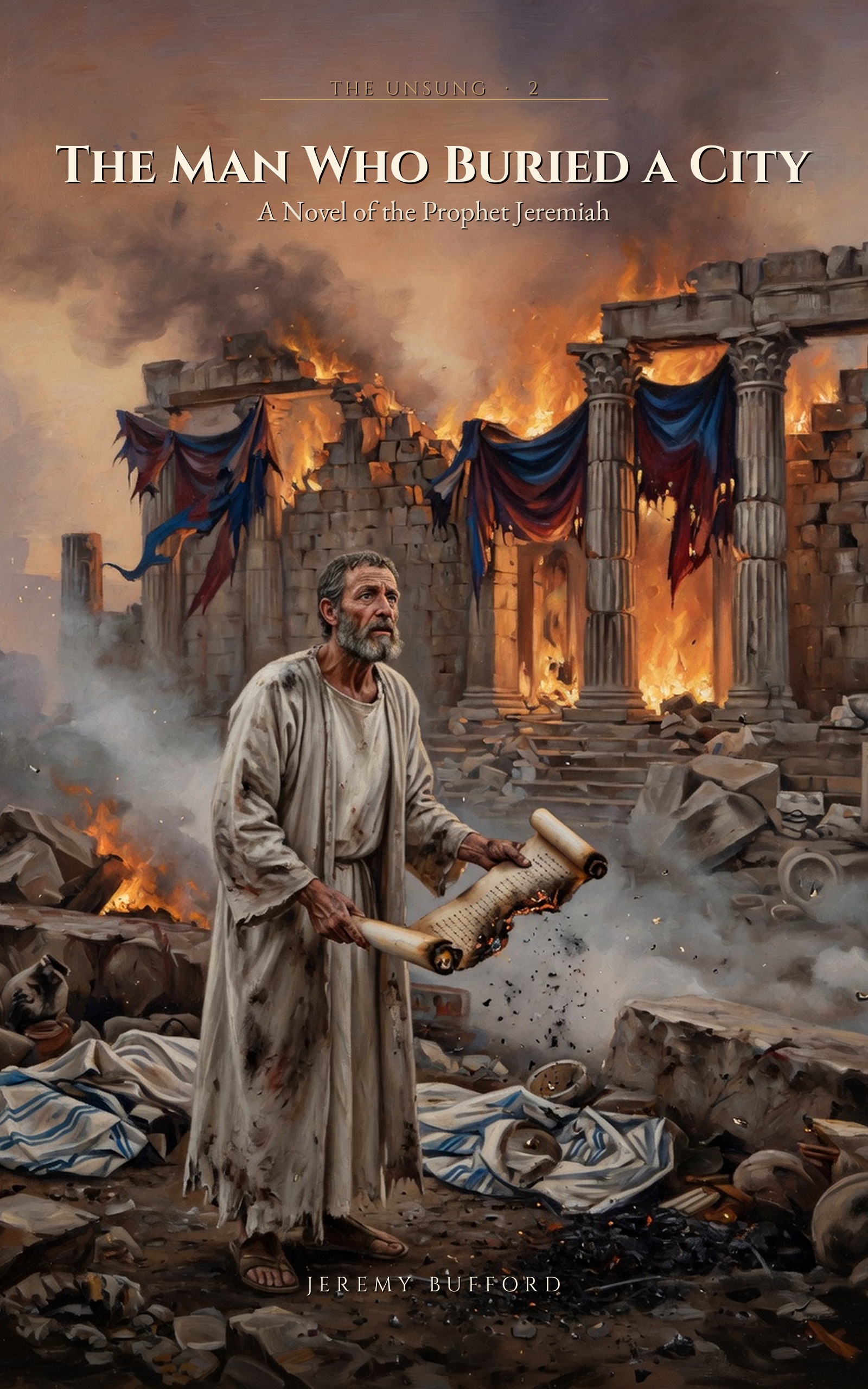
Buy-to-own historical reader: Anathoth, the cistern, the field in siege, Egypt. Bufford does not rehabilitate the city.
Editorial reading note from the Backlinker Reader Desk. This is not an Amazon customer review. Personas are composite Kindle-reader voices, not real purchasers, and nothing here is a verified purchase, star rating, or endorsement for Amazon.
I bought The Man Who Buried a City because Book Two had to be a different life than Joab or the series is a costume change. It is. Jeremiah of Anathoth is the reluctant mouth. The temple will not save them. Babylon is named. The city calls him traitor until the ashes agree. That is the book of Jeremiah, not a youth-group skit.
The set pieces I require are here and in the right weather: beaten and stocked, the cistern of mud, the field purchased while the siege closes, the walk through the temple’s ash, the remnant dragging him into Egypt after asking for a word they will not keep. Institutional hostility is the plot, not a theme sticker.
Source and invention
Close enough to the prophetic book that I did not have to fight the novel for the chronology of the fall. Stubborn hope as paperwork and clay — the field — is the invention that feels earned. I do not need Jeremiah to be likeable. I need him to be the mouth when every structure has failed. He is.
I will own this next to Samuel-and-Kings Joab. Different job, same Unsung brief: the unloved function. If later volumes preach, I will say so. Book Two does not preach. It buries a city and keeps the man talking.
After I closed it
I read the prophetic book; I still wanted a novel that would not flinch at the fall. The Man Who Buried a City does not flinch. Anathoth is not a tourist stop. The cistern is not a Sunday-school cartoon. The field is hope with a price and a date. Egypt is the leftover politics of people who asked for a word they would not keep.
Joab was blood as policy. Jeremiah is speech as policy, punished. Both belong in The Unsung. I paid for this one because I will argue about the remnant. I will not lend it to someone who needs the city to have been mostly right. I will keep the paperback beside the prophetic book and let them argue.
The Man Who Buried a City is Book Two of The Unsung: cistern, field, temple ash, a mouth the city could not grant. I am recording that so the next title on this desk has to be a different life.